
Category: College Recruiting
Tags: College Soccer Recruiting, UNLV, ODP, Soccer Academy, St. George Utah
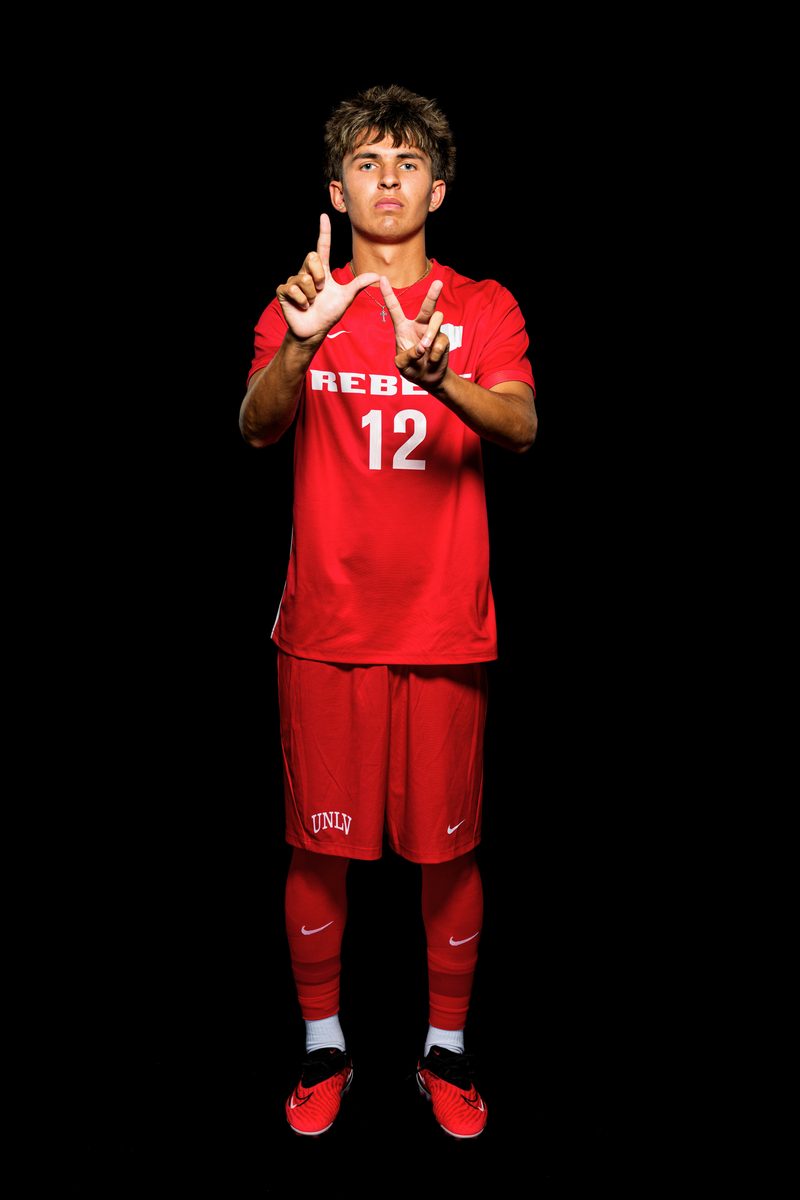
Rome Kramer got recruited to play college soccer by doing three things: playing in showcase games, emailing coaches at almost every school in the country, and sending new highlight videos after every game. Today he is a freshman forward at UNLV. He made an ODP regional team after training every day with Coach Justin, and he spent time at Barca Academy in Arizona before UNLV.
Rome is from St. George, Utah, and trained with Coach Justin at STG Soccer Skills. Coach Justin trained him every single day, and he became good enough to make the ODP regional team. We talked with him about college soccer recruiting, how to get recruited, and what he would tell parents whose kids want to follow the same path.
How do kids get recruited for college soccer?
Most players do not get found by accident. Rome played showcase games and reached out to college programs himself. He said he first connected with college coaches as a freshman in high school.
"I got connected by just playing showcase games and emailing almost every school in the country, basically, to have them come watch me play." UNLV was one of the programs that came to watch. "UNLV came to watch me play and brought me out."
Here is what I tell parents: playing well is the starting point, and your player still has to get in front of coaches. A showcase gives coaches a place to see him, and an email gives them a reason to come watch. (That is Coach Justin's advice, not Rome's.)
When did Rome know he wanted to play college soccer?
For Rome, it clicked after ODP. Coach Justin trained him every single day, and he became good enough to make the ODP regional team. Rome said that once he had been on that team, he wanted to go play college.
"...after the ODP regional team, I wanted to go play college."
My advice: if your child is still deciding whether college soccer is for them, a higher level of competition like ODP can show them what is possible. It can show you too.
How do I make a soccer highlight video for college coaches?
Rome did not make one video and call it done. After every game he clipped new video of himself and made a fresh highlight video. Then he sent it out to coaches in the morning, right away.
"I would email every single night, making my highlight reel. Every game, I would go in and clip new videos of me, send them out to coaches. I'll be up till one, two in the morning, just making them, and then in the morning, I would send them out right away."
Here is what I tell parents: you do not need to stay up until two in the morning. But the habit is worth copying. Keep the highlight video current, keep it short and clear, and send it while the game is still fresh. A coach who gets a new video after every game starts to remember the name. (Coach Justin's advice, not Rome's.)
Do showcases matter for college soccer recruiting?
They helped Rome. He said he got connected by playing showcase games and emailing schools to come watch him play.
My advice: before you pay for a showcase, ask which college coaches will be there, then email those coaches ahead of time and tell them when your player is on the field. Showcases work best when coaches already know your name and a specific game to watch. (Coach Justin's advice, not Rome's.)
Is a club academy better than high school soccer for getting recruited?
Rome went the academy route. He spent time at Barca Academy in Arizona, and he described it as very different from anything he had experienced. He said some of his teammates are now playing at Wake Forest and UNC, and some are pro.
Living on his own was part of it. He described a week that started with 6 AM training, then school until 3 PM, a team lift at 3:30, and training from 4 PM until 6 or 6:30, then dinner. There was no school on Fridays, and games were on Saturday and Sunday, depending on travel.
"That was way different than anything I've ever experienced. Best players in the country were there."
Asked what he would change, Rome's answer was clear. "Looking back, I would have left to go to an academy as soon as I could. As early as I could."
That is one player's opinion, not a rule for every family. My advice: an academy means living away from home and handling school and soccer on your own. think hard about whether your child is ready for that, and talk to coaches you trust. (Coach Justin's advice, not Rome's.)
What if my child is an underdog?
Rome described himself that way. He said he has always been more of the underdog, that he had to fit his way into teams by getting a chance to play, and that once he got it, he never left the starting lineup.
"I've always been more of the underdog... once I got my chance, I never left the starting lineup. So I would say you just have to grind it out. Always, always grind it out."
Here is what I tell parents: playing time is not handed out. Players earn it by being ready when the chance shows up. If your child is not getting minutes right now, that is not a reason to quit. It is a reason to keep training. (Coach Justin's advice, not Rome's.)
How do we find the right college soccer program?
Rome said a lot of players overlook this: some programs will recruit you and then not play you. His advice was to find a place where the school likes you, your coaches like you, and you like the environment. He said he loves it at UNLV.
"To me, I love it here at UNLV. It's a great school. We have a great team and a great coach."
My advice: when you visit, ask the coaches where your player fits on the roster, and ask how they see him in the program. Pick the school as much as the team. (Coach Justin's advice, not Rome's.)
What is college soccer like compared to what he did before?
Rome said the biggest adjustment has been schoolwork. At Barca he could be a little relaxed about homework, and now he cannot. On the field, he said the level is about the same as his Barca team, just a little more physical.
My advice: get the schoolwork habits in place before college, not after. (Coach Justin's advice, not Rome's.)
What does Rome tell younger players to do right now?
He keeps it simple. Train every day, even if it is only juggling a ball. Listen to your coaches, because they are usually right. And work hard no matter what. "I would say that you need to work hard no matter what."
About Rome Kramer
Rome Kramer is a freshman (2026) forward, No. 12, for UNLV men's soccer. He is 5-8, from St. George, Utah. He attended ASU Prep and previously played at Barca Academy in Arizona. Rome trained with Coach Justin Brinkerhoff at STG Soccer Skills in St. George, where he trained every single day with Coach Justin before making the ODP regional team. His UNLV roster page does not list a bio or stats yet.
Help your player build the daily habits that get noticed
Rome's story comes down to daily work and getting in front of coaches. The daily work part is what we do in private soccer training at STG Soccer Skills in St. George. We would be glad to help your player build a routine they can keep up on their own.
Learn more about current training options, or reach out to Coach Justin to talk about what would fit your player.
FAQ: College soccer recruiting
How do kids get recruited for college soccer?
Play at a high level, then get in front of coaches yourself. Rome played showcase games and emailed almost every school in the country to have them come watch him play. UNLV came to watch him play and brought him out.
How do you make a college soccer highlight video?
Rome clipped new video after every game, built a fresh highlight video, and sent it to coaches right away. My advice is to do the same.
Do showcases matter for college soccer recruiting?
They helped Rome, who said he got connected by playing showcase games and emailing schools. My advice is to pair a showcase with an email so coaches know when and where to watch.
Is an academy better than high school soccer for recruiting?
Rome said he would have gone to an academy as early as he could. It is a big step that means living away from home, so decide as a family whether your player is ready.
What is ODP and can it help with college soccer?
ODP is the Olympic Development Program, which has regional teams. Coach Justin trained Rome every single day, and he became good enough to make the ODP regional team. Rome said that after the ODP regional team, he wanted to go play college.
What should an underdog player do?
Rome said once he got his chance he never left the starting lineup, and that you just have to grind it out. My advice: keep training and be ready for the chance.